
Flyte
Flyte is a flexible and scalable platform for orchestrating workflows, integrating data, ML, and analytics.
Introduction
Flyte is an infinitely scalable and flexible workflow orchestration platform that seamlessly unifies data, ML, and analytics stacks. It helps in building production-grade data and ML workflows hassle-free.
What stands out?
Infinitely scalable and flexible workflow orchestration platform
Seamlessly unifies data, ML, and analytics stacks
Rapid experimentation with production-grade software
Scalability to handle changing workloads and resource needs
Empowers data practitioners and scientists to work independently
End-to-end data lineage for tracking workflow health
Collaboration with reusable components
Smooth platform-level integrations
Dynamic resource allocation without infrastructure changes
Visualization and rendering of plots with FlyteDecks
Frequently Asked Questions
What is Flyte?
How to use Flyte?
What is Flyte?
How can I use Flyte?
What are the core features of Flyte?
What are the use cases of Flyte?
Is there pricing information available for Flyte?
More Information
Flyte Company
Flyte Company name: Union.ai .
Flyte Linkedin
Flyte Linkedin Link: http://linkedin.com/
Flyte Twitter
Flyte Twitter Link: https://twitter.com/flyteorg
Flyte Github
Flyte Github Link: https://github.com/flyteorg/flyte
Reviews & Feedback
Share your experience with the community
0.0
Based on 0 reviews
User Comments (0)
Sort Criteria
Order
No reviews yet. Be the first to share your thoughts!
Statistics
Monthly visits
NaN
Saved by users
0
Rating
0.0/ 5.0
Added on
—
Similar Tools

Pixelcut
Easily create stunning product photos and ads with our free online design tool. Remove backgrounds and erase objects effortlessly.

Wondershare
Discover innovative tools for enhancing creativity, productivity, and efficiency with our app. Unleash your potential today!

TurboScribe
Unlimited AI transcription with 99.8% accuracy in 98+ languages.

Intercom
Get quicker solutions with Automation and human assistance. Enhance support efficiency for faster issue resolutions.
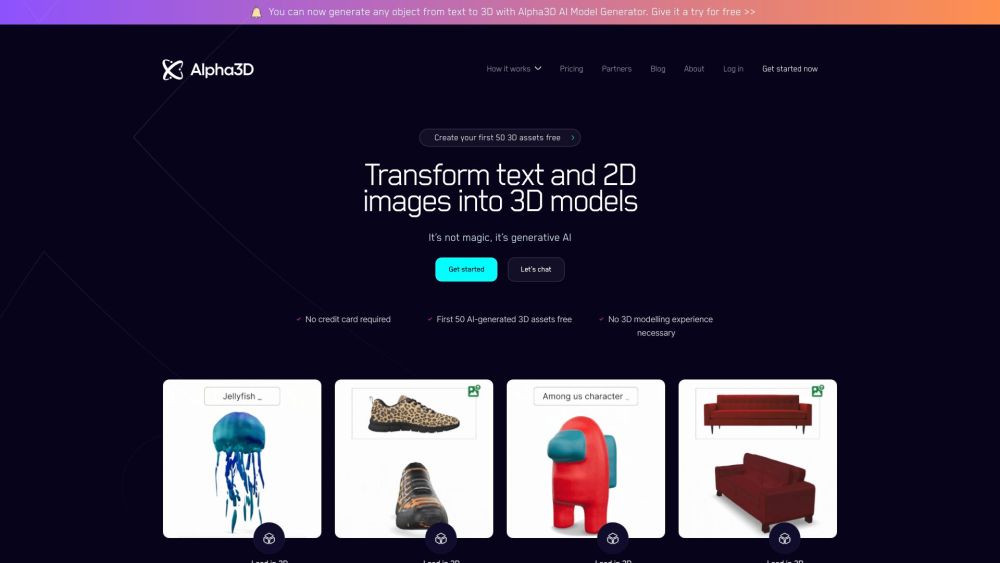
Alpha3D
Transform 2D images into 3D assets with generative AI.
Use Cases
- Data processing
- Distributed model training
- Data analytics
- Bioinformatics
- AI orchestration
How to Use
To use Flyte, you can follow these steps: 1. Build your data and ML workflows using the intuitive Python SDK or any language of your choice. 2. Debug and iterate on your workflows on a minimal Flyte setup or sandbox. 3. Analyze and monitor the execution of your workflows by tracking data lineage and logs. 4. Visualize and render plots or visualize data with FlyteDecks. 5. Deploy your workflows to the cloud or on-premises without dealing with infrastructure complexities. 6. Scale your workflows dynamically, adjusting resource allocation as needed. Note: Flyte offers a range of integrations and features to support various use cases in data, machine learning, analytics, bioinformatics, and AI orchestration.